1. Overview
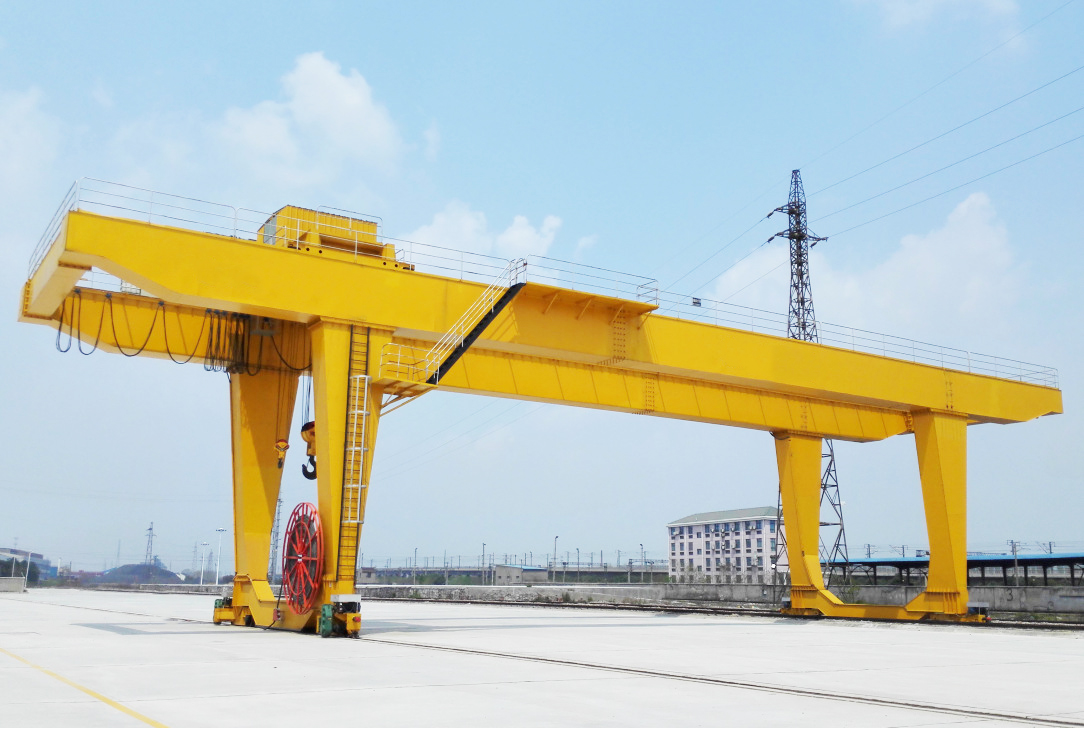
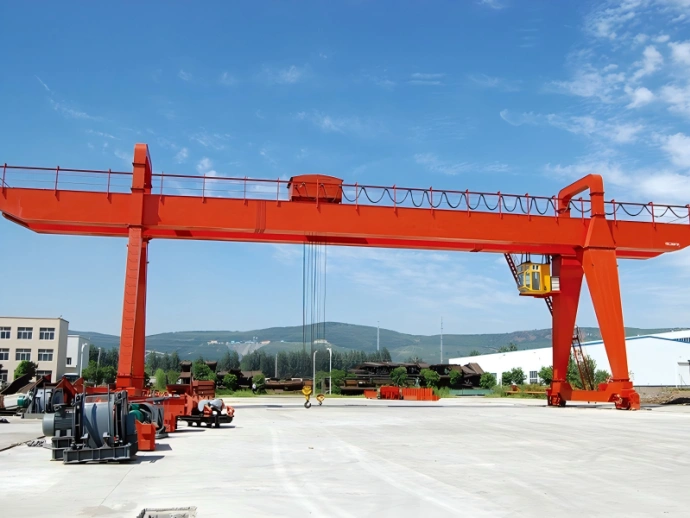
A cantilever gantry crane is a variant of a gantry or semi-gantry crane where the main beam is designed to extend beyond the crane’s runway tracks on one or both sides. This structural innovation allows the crane to handle materials outside the standard track span area, significantly expanding the operational range and flexibility without moving the entire crane. It is not a standalone crane type but rather a strategic modification to the standard gantry crane structure. Such cranes are widely used in ports, yards, factories, and any industrial setting requiring extensive coverage and heavy material handling.
2. Function and Understanding of the Cantilever
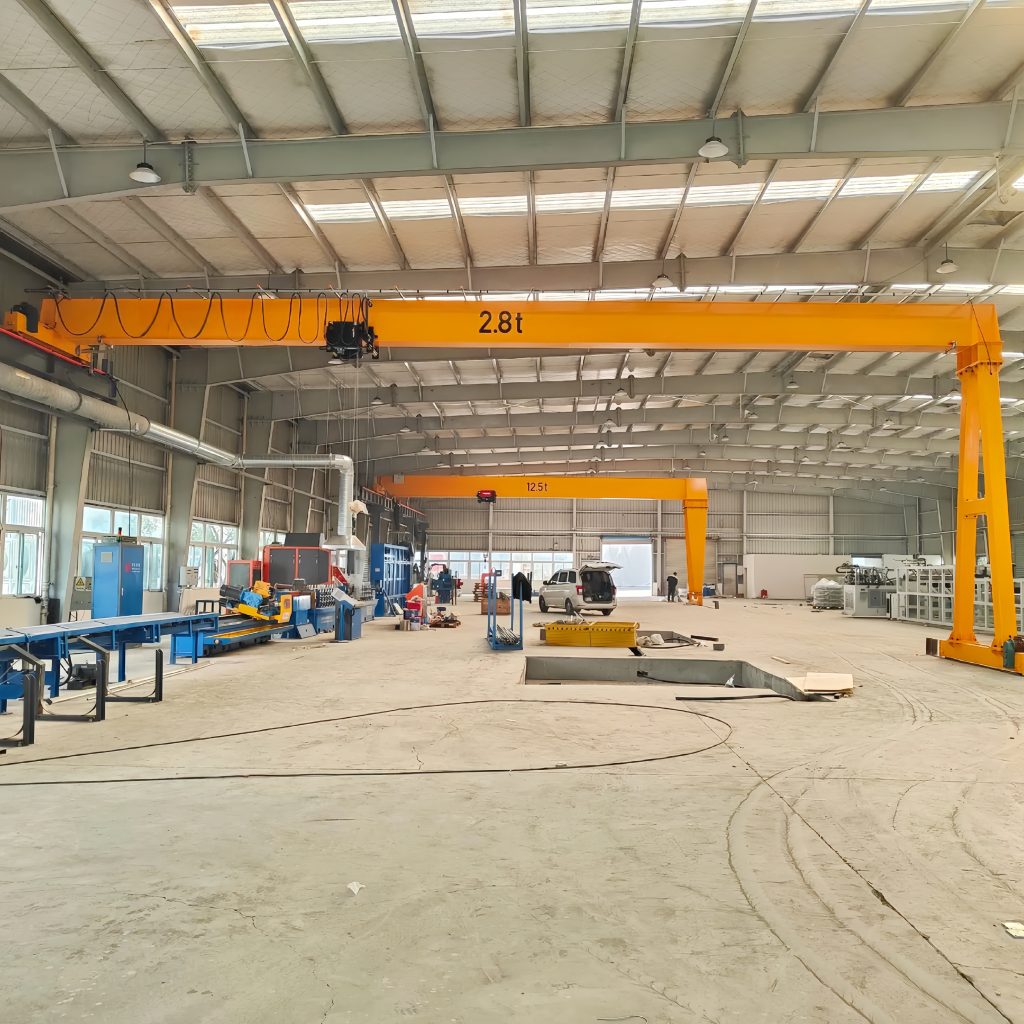
The cantilever is a beam structure that extends outward from the crane’s main beam beyond the runway tracks. Its core purpose is to effectively expand the crane’s working coverage area without altering the existing track layout. Specifically:
- Expanded Working RangeThe cantilever enables the crane to cover areas outside the tracks and adapt flexibly to narrow or constrained spaces, such as loading/unloading vehicles or accessing materials beside the tracks.
- Improved Operational EfficiencyBy directly serving areas outside the tracks, it reduces the need for the crane to reposition itself back and forth, thereby shortening material handling cycles and significantly boosting overall production efficiency.
- Enhanced ApplicabilityWith these capabilities, cantilever gantry cranes are particularly prominent in scenarios like ports (ship loading/unloading), railway yards (wagon cargo handling), and large factories (spanning multiple production lines or storage areas). In short, the cantilever enables continuous operation both inside and outside the standard span, maximizing productivity while minimizing equipment repositioning or production downtime.
3. Key Advantages
Building on its functions, the cantilever gantry crane offers the following notable operational advantages:
- Extended Lifting and Transport CapabilityThe cantilever structure allows the crane to vertically lift and horizontally move loads to areas beyond the track span, handling cargo that standard gantry cranes cannot directly reach.
- Optimized Spatial CoverageEven in space-constrained sites, the cantilever effectively expands the material handling range, improving site space utilization.
- Exceptional Operational EfficiencyWith fewer required repositioning movements, single work cycle times are reduced. Often, from a single span position, loading/unloading operations at multiple points both inside and outside the tracks can be completed, significantly boosting efficiency.
These advantages make cantilever gantry cranes particularly suitable for ports, large manufacturing plants, logistics yards, and construction sites. By cleverly extending the service area beyond the tracks, operators can handle oversized cargo or materials located off-track without interfering with other operations within the track area.
4. How to Determine the Appropriate Cantilever Length
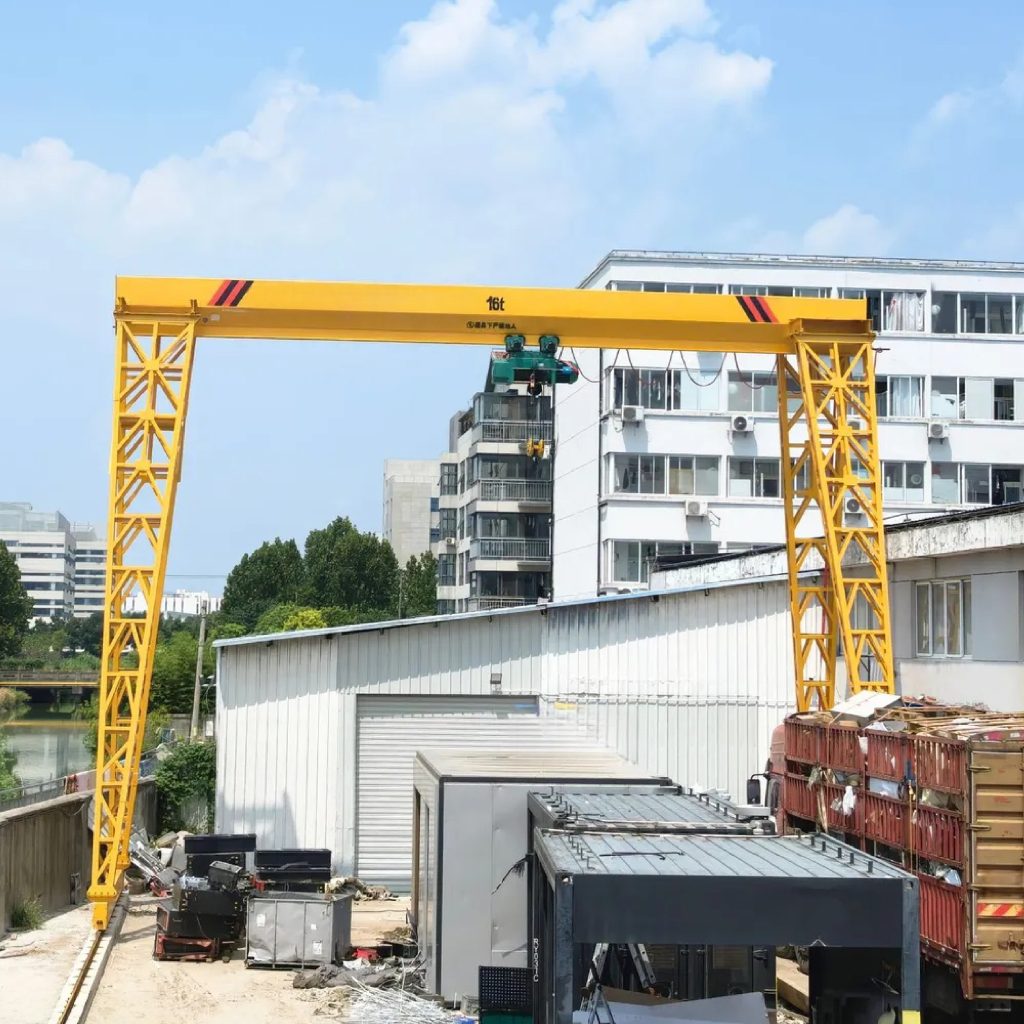
Selecting the appropriate cantilever length is crucial for ensuring operational safety and efficiency. A common starting point in the industry is a cantilever length of approximately one-third of the crane’s main span, but this is not a fixed rule. The final design must comprehensively consider the following factors:
- Structural Loads and Self-WeightA longer cantilever increases the crane’s own structural weight and imposes greater moments and pressures on the support structures (such as legs, tracks, and foundations).
- Working Radius and RequirementsThe effective reach depends on the horizontal distance from the trolley or hook support point to the end of the cantilever, which must match actual operational needs.
- Environmental FactorsThese include wind loads (especially for outdoor cranes), extreme temperatures, high-altitude operating conditions, and corrosive environments, all of which affect material strength and fatigue life.
- Operating ConditionsThe frequency and weight of loads, required lifting height, type of lifting attachments, and specific site layout all influence the safe working length of the cantilever.
In practice, typical cantilever lengths usually range from 6 to 12 meters, striking a balance between reach and structural integrity. For any practical project, rigorous calculation and verification by professional engineers are essential. This includes stress analysis, deflection checks (typically controlled within a specific ratio of the span/cantilever length), wheel load calculations, and overall stability assessments to ensure the cantilever can operate safely under the anticipated load spectrum.
5. Cantilever Size Design Process
A systematic design process typically includes the following steps and may require iterative optimization:
1.Define Duty Group and Load Spectrum: Determine the crane’s duty class based on international standards (e.g., ISO, FEM, CMAA), clarifying load types, lifting states, and cycle numbers.
2.Determine Rated Load and Calculate Load Cases: Determine the maximum lifting capacity and calculate various load cases, including static loads, dynamic loads (hoisting shocks, travel inertia), wind loads, and forces from accelerations.
3.Pre-determine Cantilever Envelope Dimensions: Based on the required maximum hook reach, site clearance height restrictions, and interference checks with other equipment, preliminarily determine the cantilever’s geometric dimensions and spatial envelope.
4.Perform Structural Checks:
- Main Girder Stress AnalysisCheck the strength (bending, shear) of key sections at the cantilever root and main girder to ensure compliance.
- Deflection CheckEnsure that vertical and horizontal deflections at the cantilever end under rated load are within specified limits to guarantee smooth operation and positioning accuracy.
- Wheel Load CalculationVerify the maximum and minimum wheel pressures under the legs to ensure they do not exceed the bearing capacity of the track and foundation.
- Stability AssessmentPerform calculations for anti-overturning stability (both in-service and out-of-service conditions) and overall structural stability.
5.Iterative Optimization: Adjust the cantilever dimensions, structural form, or reinforcement based on the check results, and repeat calculations until all safety regulations and specific operational requirements are fully met.