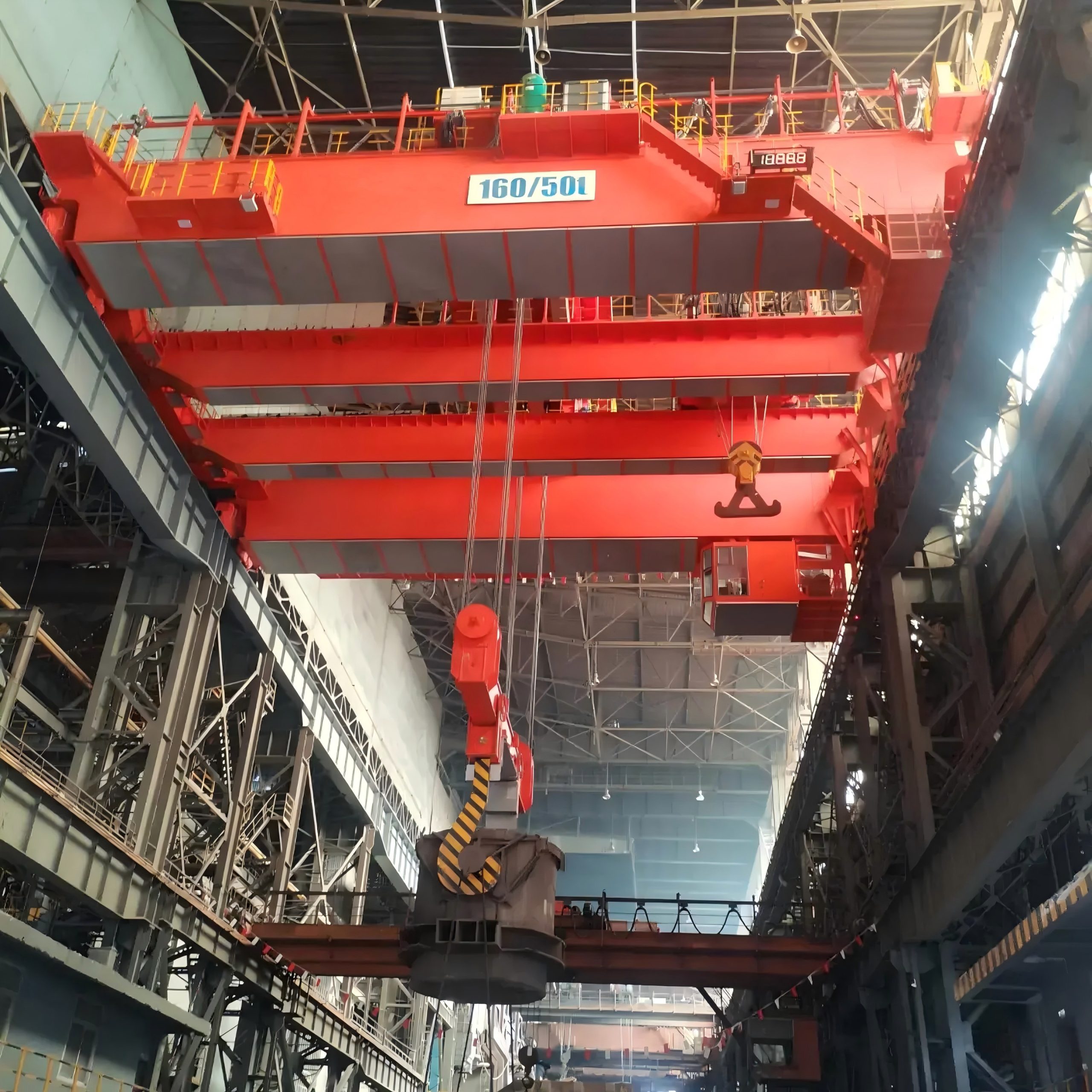
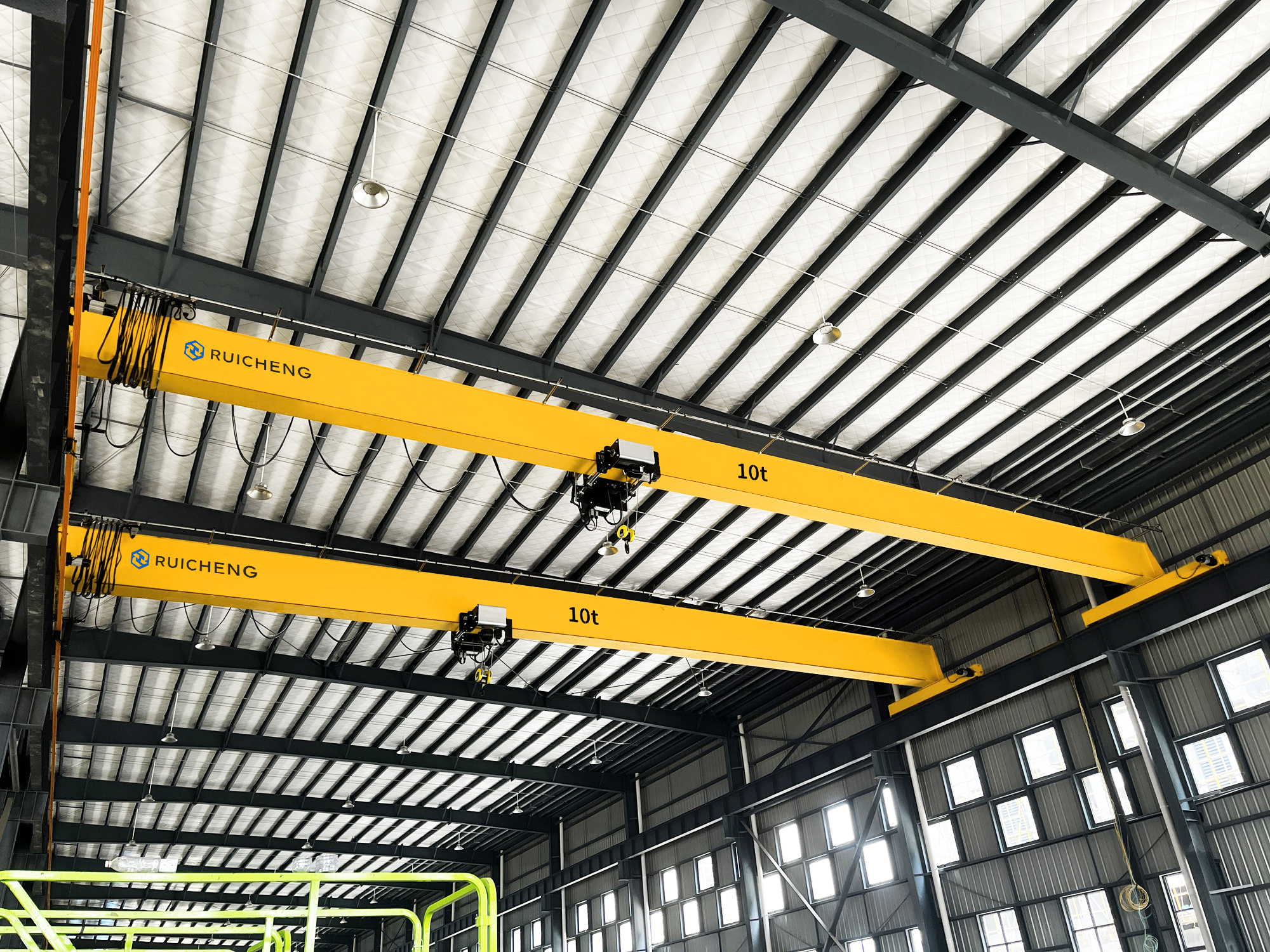
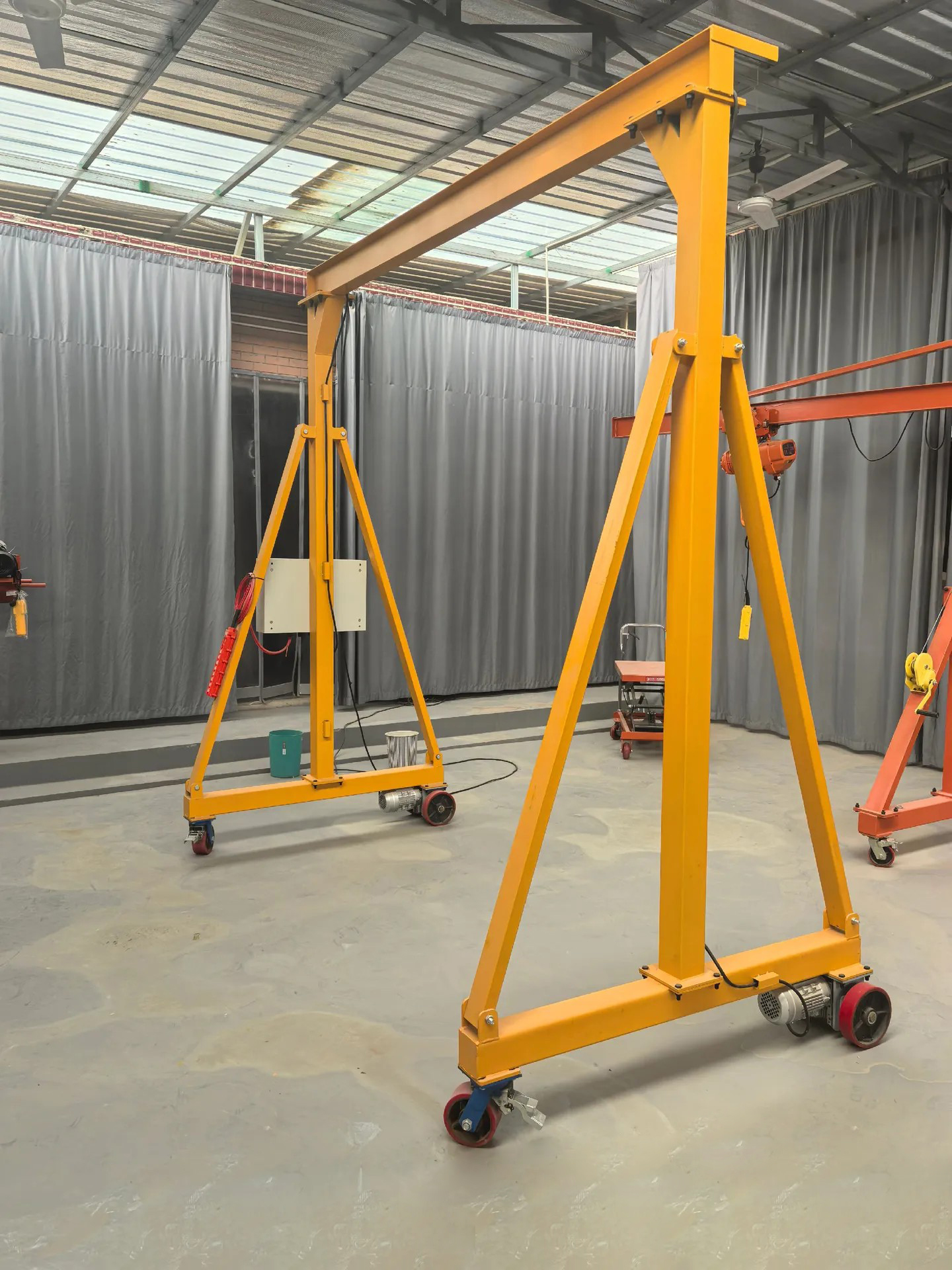
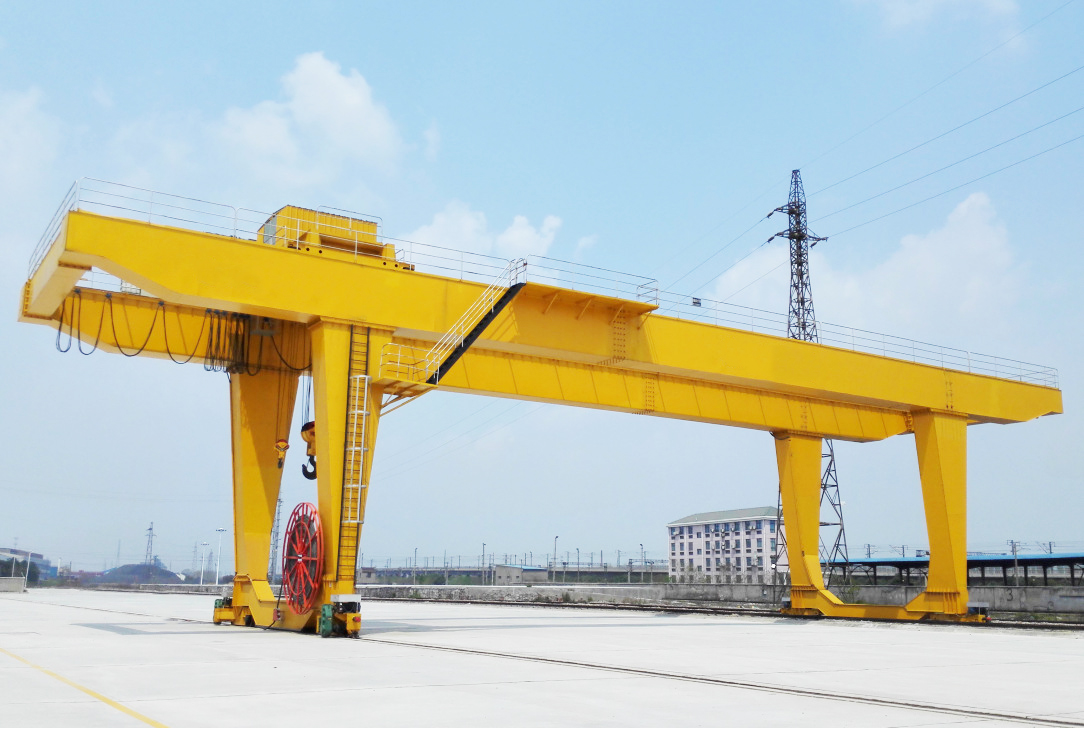
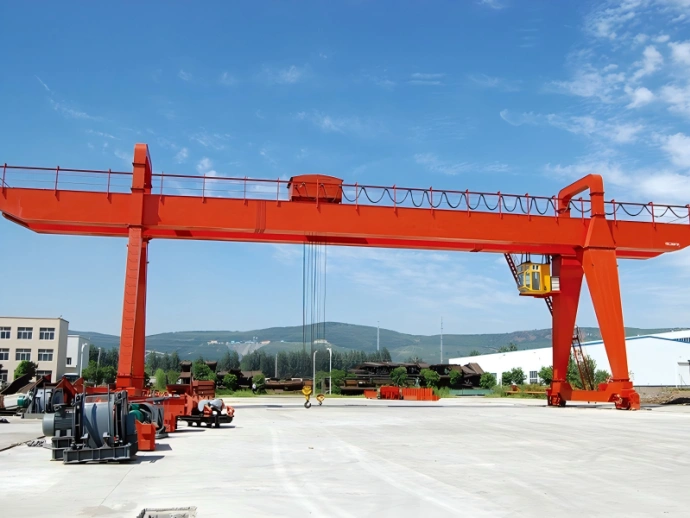
Excessive sway during the lifting and transportation of heavy loads by metallurgical overhead cranes can easily lead to collisions, tipping, and other accidents. It requires comprehensive control through equipment optimization, standardized operation, and auxiliary measures. The following are specific solutions:
I. Equipment Structure Optimization
1.Install Anti-Sway Mechanisms
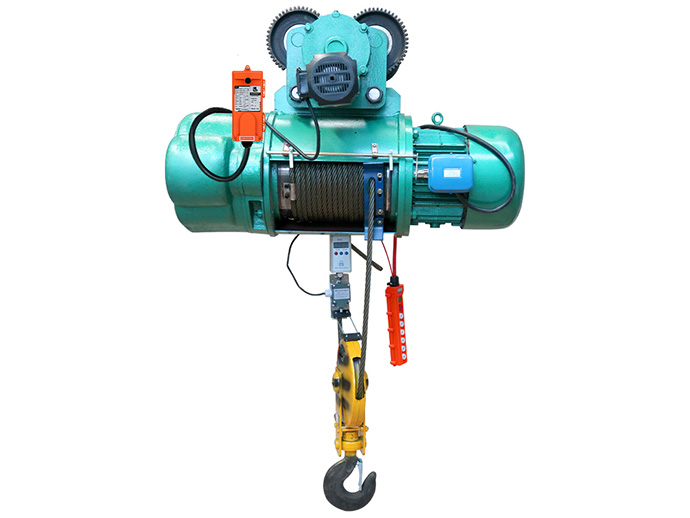
•Implement Variable Frequency Drive (VFD) control systems on hoisting and travel mechanisms to enable smooth acceleration and deceleration, preventing inertial sway caused by sudden starts or stops.
•Equip cranes with electronic anti-sway systems. These systems use sensors to monitor the real-time position of the load and automatically adjust operational parameters to counteract swing.
2.Optimize Wire Rope and Lifting Gear Design
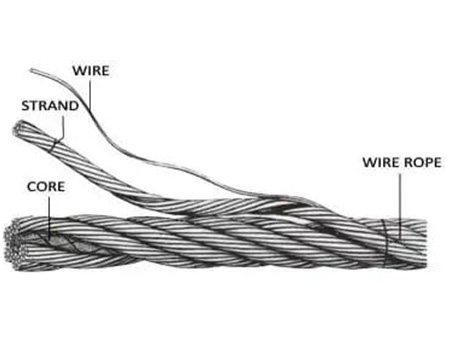
•Select low-rotation or non-rotating wire ropes with low flexibility to minimize secondary sway caused by rope elasticity and twist.
•Ensure the contact surface between the lifting gear and the load is even to avoid eccentric loading.
•For irregularly shaped loads, use specialized spreader beams or lifting beams to distribute force points and ensure the center of gravity is perpendicular to the centerline of the lifting gear.
3.Reinforce Mechanical Structure
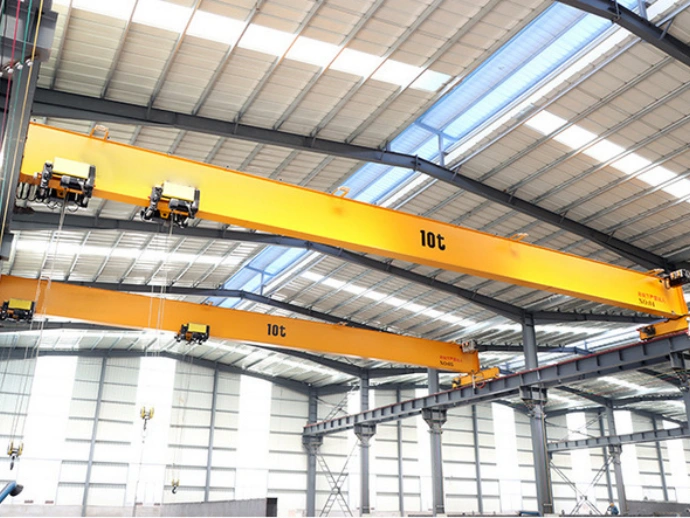
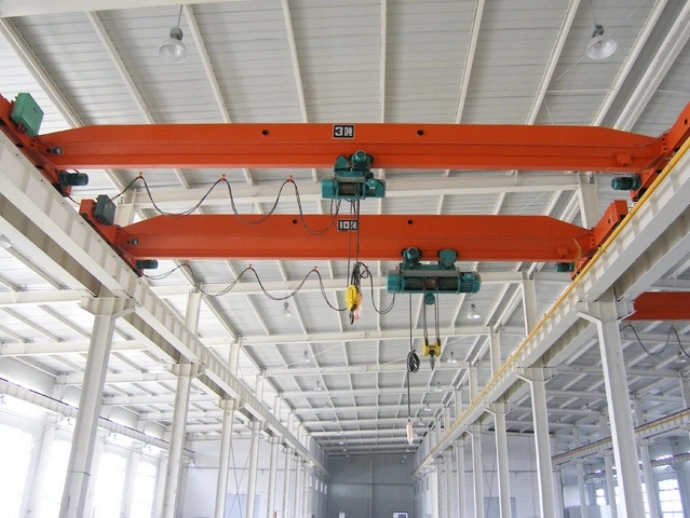
•Regularly inspect the main girder, end girders, and trolley rails for deformation.
•Ensure the levelness deviation does not exceed 1/1500 of the span to prevent operational vibration due to structural deformation.
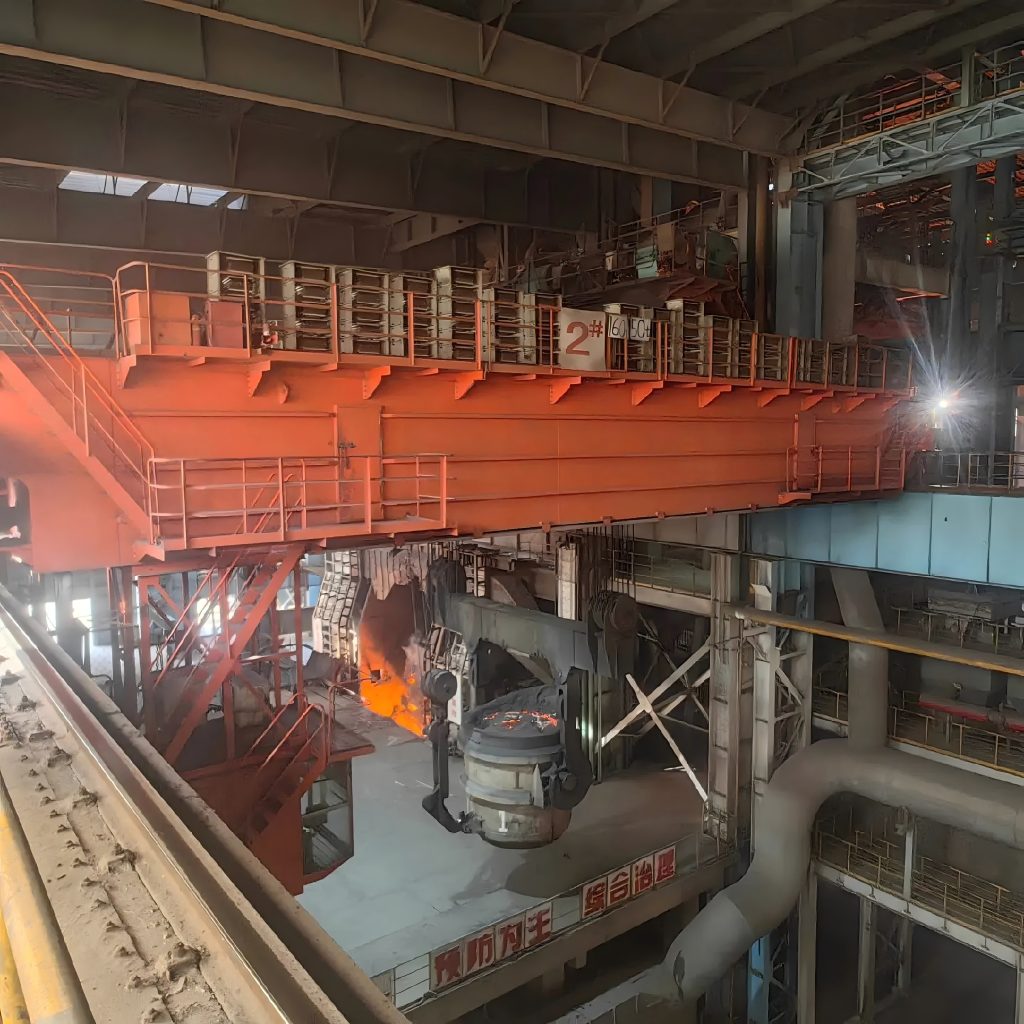
II. Operational Standardization and Control
1.Coordinate Hoisting and Travel Movements
•Perform a Test Lift: Before full lifting, slowly raise the load 100-200mm off the ground. Observe if it is level and if the lifting gear is secure. Proceed only after confirming no abnormalities.
•Adopt a Phased Operation Mode: Use a “Slow-Start-Slow-Stop” sequence for hoisting, lowering, and trolley/bridge travel. Reduce speed during start-up and braking phases, maintain constant speed in the middle, and minimize inertial impact.
2.Avoid Abrupt Stops and Direction Changes
•When changing direction during travel, first decelerate to a complete stop before initiating movement in the reverse direction. Never use “plugging” (rapidly reversing motor polarity) while at high speed.
•Maintain smooth and continuous movements when operating via pendant or cab controls. Avoid frequent “jogging,” which can cause repeated load oscillation.
3.Limit Swing Angle
•During transport, the load’s swing amplitude should not exceed ±15° horizontally.
•If exceeded, immediately stop the crane. Use “inching” motions of the trolley or bridge to dampen and stabilize the load before resuming operation.
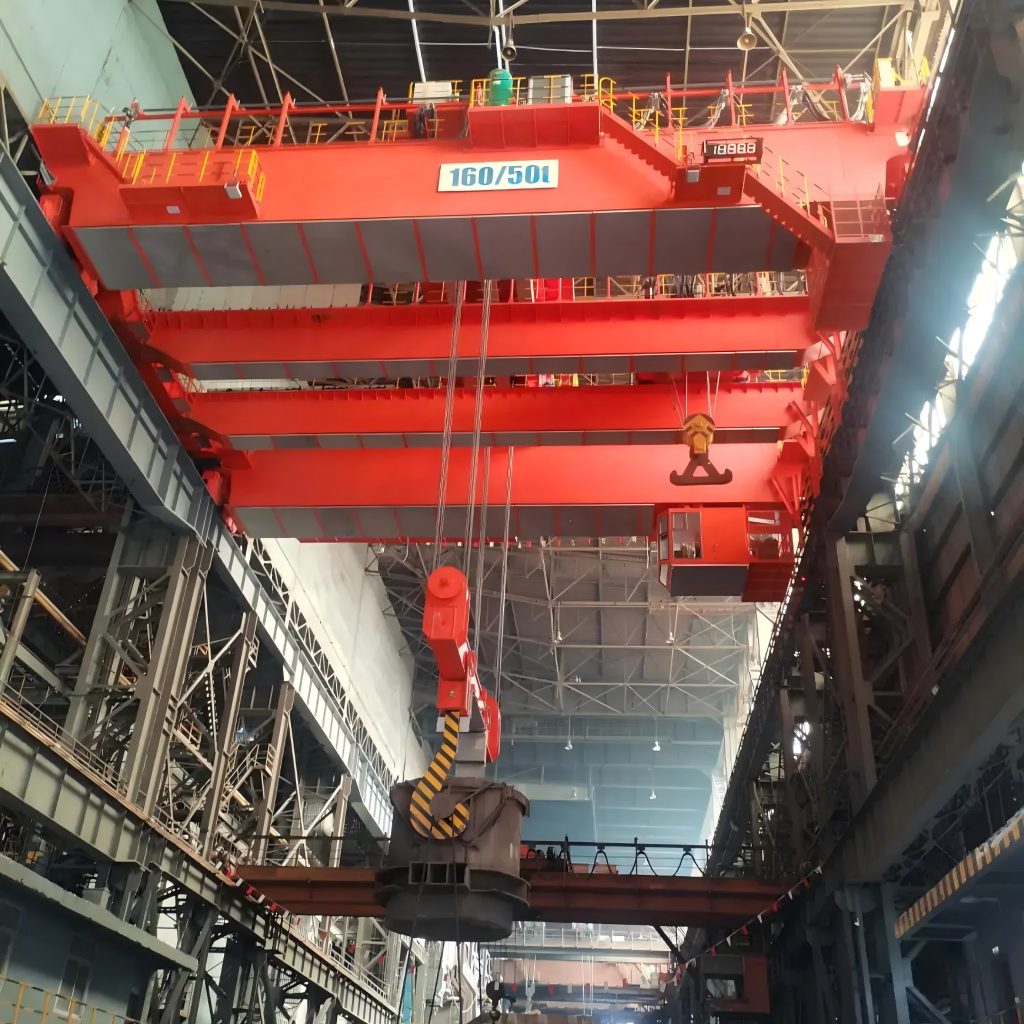
III. Application of Auxiliary Measures
1.Install Windproof and Anti-Sway Devices
•For outdoor operations or in high-wind conditions, equip cranes with automatic rail clamps, anchor devices, and secure loads using wind guy lines to reduce wind-induced sway.
2.Utilize Auxiliary Tools
•For long loads, use balanced counterweights at the ends or multi-point lifting attachments to prevent sagging and swaying in the middle.
•Place cushioning materials or shock-absorbing platforms at landing points to reduce impact rebound upon lowering the load.
3.Environment and Worksite Management
•Keep travel paths clear of obstacles and ensure rails are straight and free of debris.
•Plan the lifting path in advance for confined areas to minimize frequent starts/stops or sharp turns.
Supplementary Notes
1.Personnel Training & Monitoring: Operators require specialized anti-sway training. Installing real-time monitoring cameras can aid in observing load status.
2.Regular Maintenance: Perform scheduled maintenance on key components (brakes, wire ropes, sheaves) to prevent increased sway due to wear.
3.Technical Upgrades: Consider integrating automatic positioning and intelligent anti-sway systems, which use algorithms to predict and automatically correct sway trajectories.
By implementing the above comprehensive measures, the risk of excessive sway during crane operations in metallurgical settings can be significantly reduced, enhancing both safety and operational precision. Practical application should be flexibly adjusted based on specific working conditions (e.g., load characteristics, workshop layout).