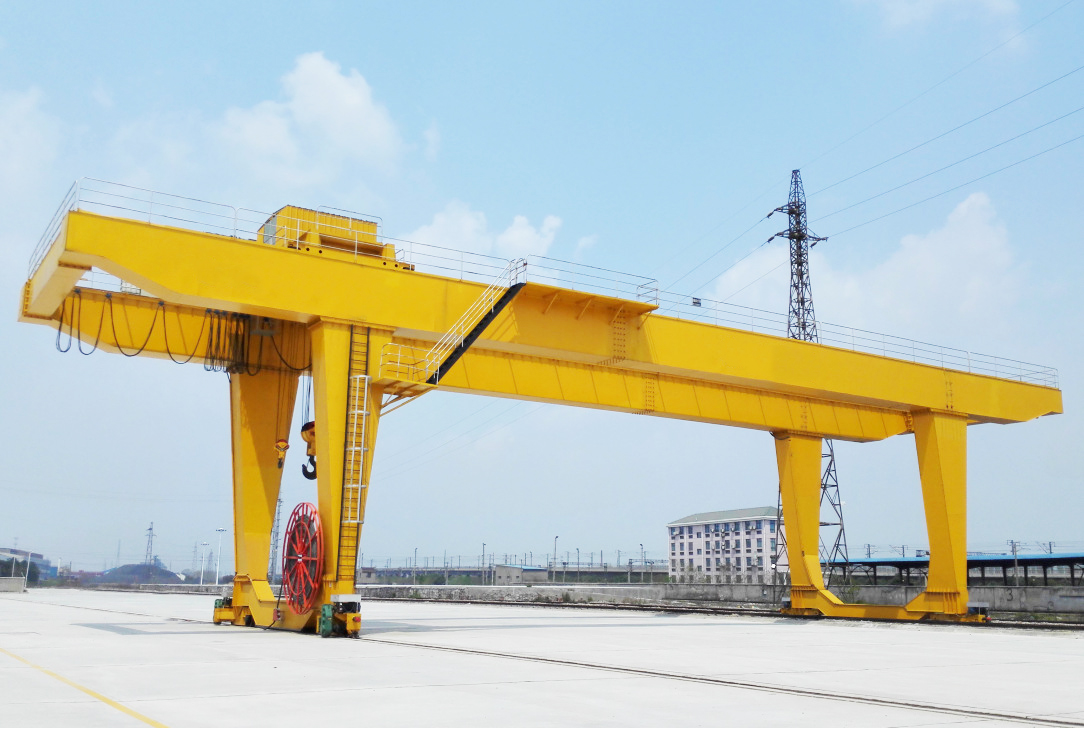
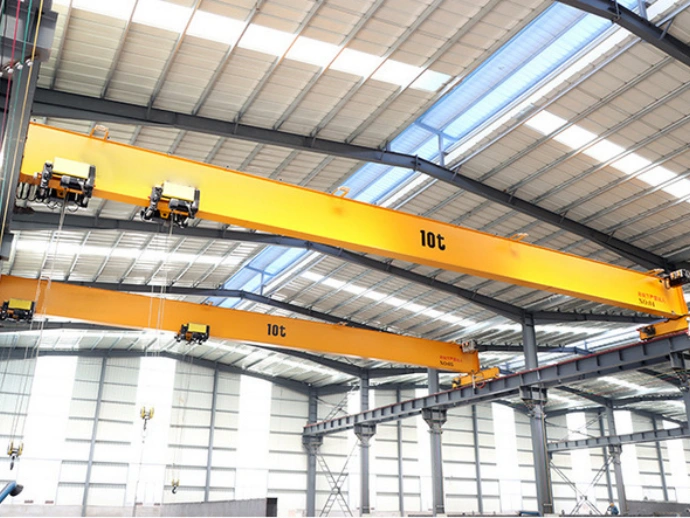
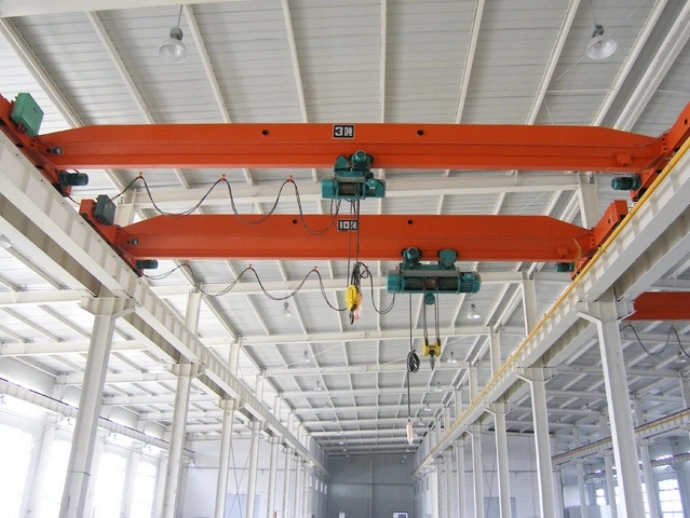
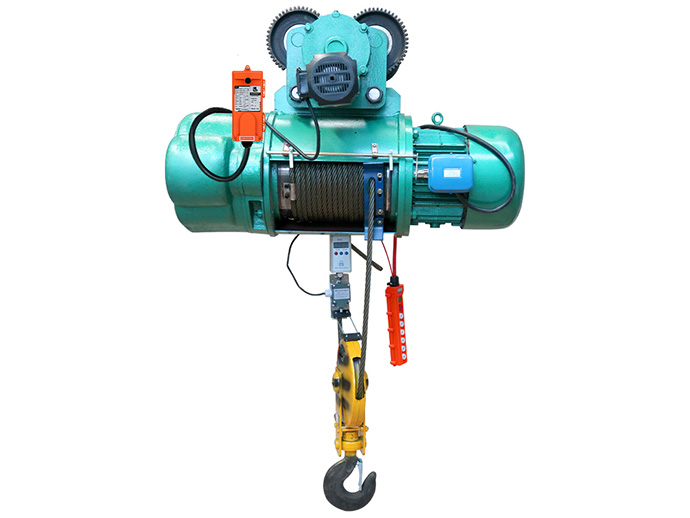
Introduction: Why Wire Rope Selection is Critical in Crane Systems
Wire rope is the core load-bearing component of all lifting machinery. An incorrect selection can lead to:
- Premature fatigue failure
- Drum crushing damage
- Load rotation accidents
- Increased downtime and cost
Proper crane wire rope selection must consider several critical factors:
- Load capacity
- D/d ratio (sheave or drum diameter relative to rope diameter)
- Bending fatigue resistance
- Anti-rotation performance
- Environmental conditions (temperature, corrosion, marine exposure)
This guide provides a systematic selection reference for various applications, including:
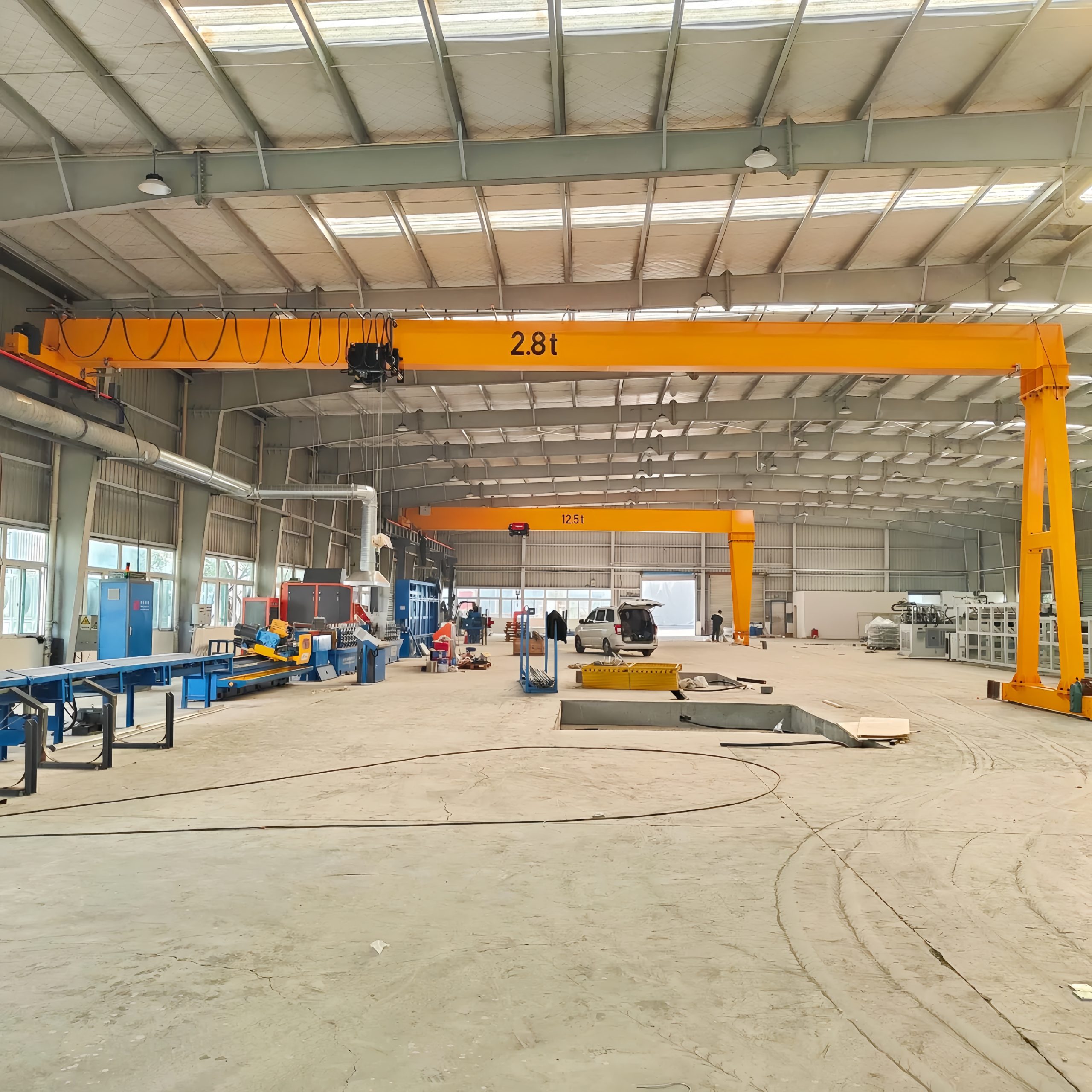
- Factory cranes
- Construction cranes
- Port and container cranes
- Grab cranes
- Marine cranes
- Salvage operations
1. Wire Rope Selection for Factory Cranes
1.1 General Machinery Plants (Intermittent Operation)
Operating Features:
- Medium duty cycle
- Moderate load variation
- Standard ambient temperature
Recommended Wire Rope Constructions:
- 6x25Fi
- 6x29Fi
- 6x26WS
- 6x36WS
- 8x25Fi
- 8x26WS
Why These Constructions?
- Line contact strands increase the metallic cross-sectional area for better strength.
- 8-strand ropes offer greater flexibility.
- These types are well-suited for small and medium-tonnage overhead cranes.
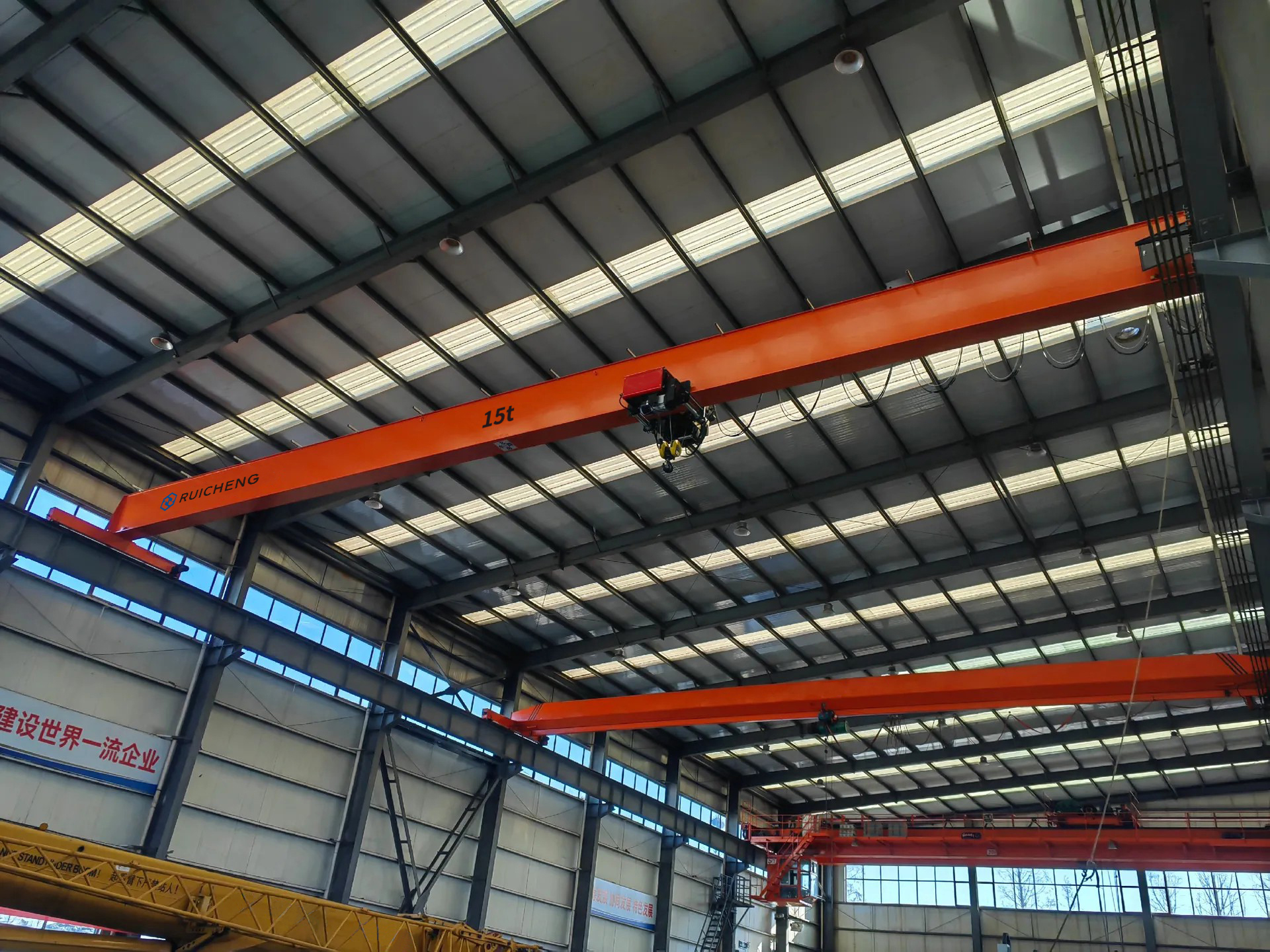
Ideal for: Single girder overhead cranes and suspension cranes.
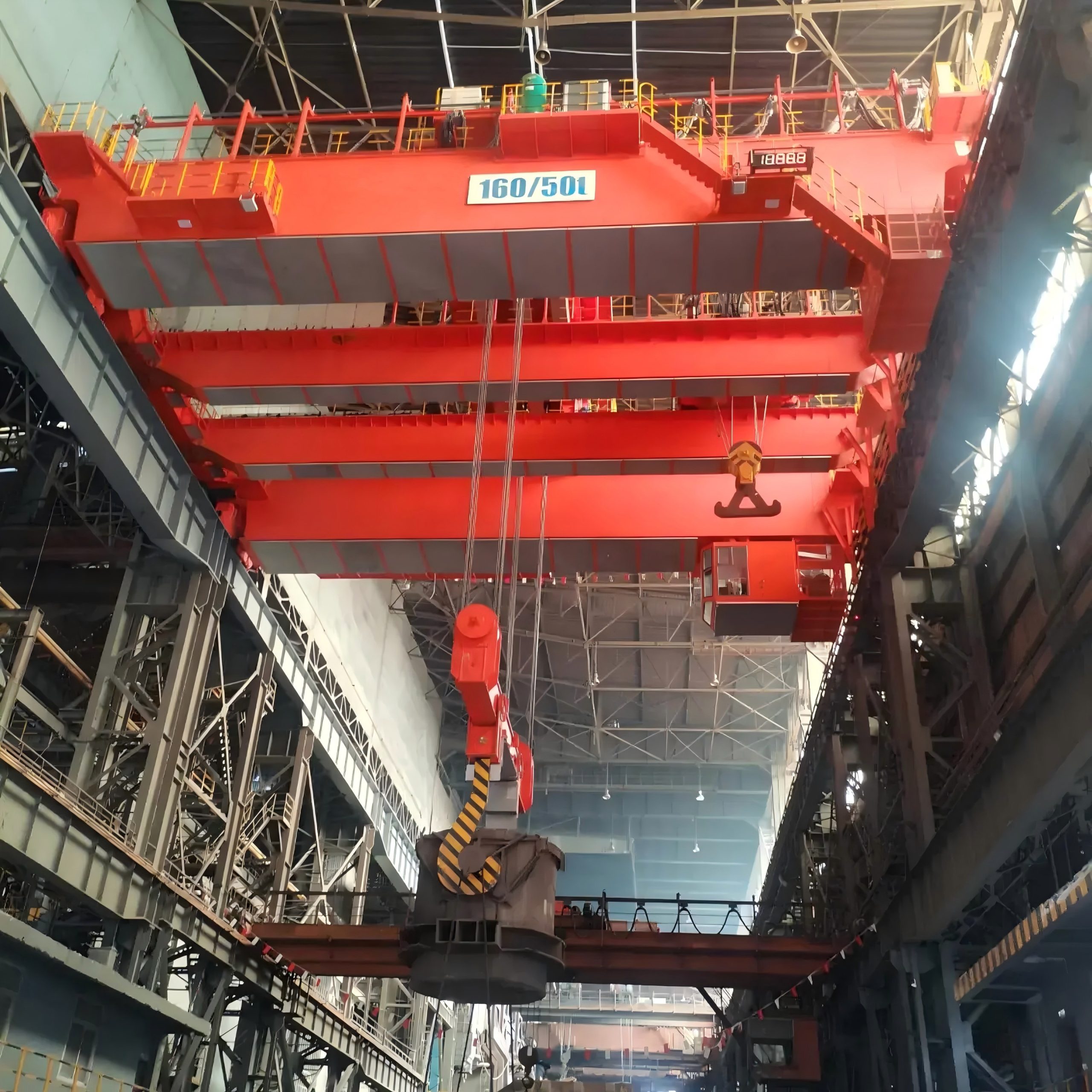
1.2 Metallurgical Plants (High Temperature & Heavy Duty)
Operating Challenges:
- Continuous operation
- Heavy loads
- Temperatures up to 300°C+
- Severe shock loads
Recommended Constructions:
- 6x29Fi+IWR
- 6x36WS+IWR
- 6x41WS+IWR
- 8x36WS+IWR
- 8x41WS+IWR
- K6xK36WS+IWR (compacted strand, offering up to 30% longer fatigue life)
Key Selection Rules:
✔ Fiber core (FC) is prohibited due to heat and crushing risks.
✔ Independent wire rope core (IWR) is mandatory for crush resistance.
✔ Compacted strands are preferred for improved wear resistance.
2. Wire Rope Selection for Construction Cranes
2.1 Tower Crane Wire Rope Selection
Typical Operating Conditions for Hoisting Ropes:
- Small drum diameters (D/d ≤ 20)
- Frequent bending cycles
- High-rise lifting applications
Recommended Constructions:
1.Low-Rise Construction:
- 6x25Fi
- 6x29Fi
- 6x36WS
- 8x25Fi
- 8x26WS
2.High-Rise Construction (Non-Rotating Required):
- 4Vx39S+FC
- 4Vx48S+FC
- 18×7+FC
- 35Wx7
- K4xK36WS+FC
These non-rotating constructions are essential to prevent:
- Load spinning
- Cabling (dog-legging)
- Hook rotation
2.2 Truck Cranes & Crawler Cranes
Common Problems for Main & Auxiliary Hoist Ropes:
- Multi-layer winding
- Rope crushing on drums
- Load twist in free-hanging configurations
Recommended by Tonnage:
| Crane Type | Recommended Wire Rope |
| Small | 6x29Fi+IWR, 18×7+IWS |
| Medium | 4Vx39S+5FC, 35Wx7 |
| Large | 4Vx48S+5FC, 35(W)xK7 |
3. Container Crane Wire Rope Selection (Port & Terminal)
Applies to:
- Ship-to-Shore (STS) cranes
- Rubber-Tyred Gantry (RTG) cranes
Five Critical Selection Factors:
1.Compact structure to minimize rope diameter for a given strength.
2.High bending fatigue resistance for thousands of cycles.
3.Metal core (IWR) is mandatory for crush resistance under multi-layer winding.
4.Left lay and right lay pairing to create an anti-sway design in twin-hoist systems.
5.Plastic-impregnated compacted rope for ultra-high frequency operations.
Recommended Structures:
Standard:
- 6x29Fi+IWR
- 6x36WS+IWR
- 8x26WS+IWR
- 8x36WS+IWR
Premium:
- 8xK26WS+PWR(K)
- 8xK36WS+PWR(K)
- 8xK36WS+PWR(K)(CC) (Compacted & Coated)
Note: 4V compacted ropes are generally not suitable for the specific bending and compression regimes of modern port cranes.
4. Grab Crane Wire Rope Selection
Used in:
- Portal cranes
- Bulk cargo unloaders
Recommended Constructions:
1.Light / Medium Duty:
- 18×7+IWS
- 18x19S+IWS
2.Heavy Duty:
- 24Wx7
- 35Wx7
- 35(W)xK7
✔ Galvanized (Class A or B) is highly recommended.
✔ These ropes are designed to withstand impact loads and, in many cases, seawater corrosion.
5. Marine Crane Wire Rope Selection
Applied in:
- Offshore engineering vessels
- Ship deck cranes
Recommended Constructions:
- 6x24S
- 6x25Fi
- 6x29Fi
- 8x25Fi
- 8x26WS
Why These Constructions?
- They offer a high breaking force relative to rope diameter.
- They provide better performance under the confined drum size constraints typical on vessels.
- A galvanized coating is essential for corrosion resistance.
6. Salvage Wire Rope (Extreme Conditions)
For underwater lifting and wreck recovery:
Recommended Constructions:
- 6x41WS
- 6x49SWS
- 6x55SWS
- 8x41WS
Mandatory Requirements:
✔ Metal core (IWR) for maximum strength and support under high tension.
✔ Fully galvanized with a heavy zinc coating (≥300 g/m²).
✔ Factory pre-stretched to minimize constructional stretch during critical lifts.
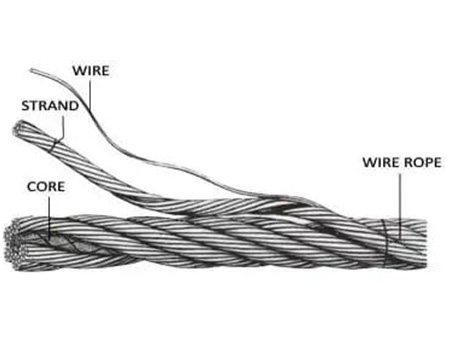
7. Wire Rope Construction Code Explained
| Code | Meaning | Performance Focus |
| Fi | Filler wires | High flexibility |
| WS | Warrington-Seale | Combines wear and fatigue resistance |
| IWR | Independent Wire Rope core | Maximum crush resistance |
| IWS | Independent Wire Strand core | Moderate support for the main strands |
| FC | Fiber core | Good lubrication retention (standard environments) |
| K | Compacted strand | High wear resistance and strength |
| PWR(K) | Filled (Plastic) Compacted core | Very low elongation, excellent fatigue life |
| VX | 4-strand triangular | High resistance to rotation |
| 35Wx7 | 35-strand Warrington-class | Heavy-duty anti-twist applications |
8. Environmental & Application Correction Factors
High Temperature Environment:
- No FC(Fiber Core).
- IWR is mandatory.
- Galvanized ropes can withstand surface temperatures up to 450°C.
Corrosive Environment:
Hot-dip galvanized is the preferred coating.
Plastic-impregnated ropes offer an extra barrier for marine ports.
Multi-layer Spooling:
- A metal core (IWR) is required to prevent crushing on lower layers.
- Compacted or 8-strand constructions are preferred for their stability.
Conclusion: How to Choose the Right Crane Wire Rope
Selecting the right wire rope is a strategic balance of:
Strength + Fatigue Resistance + Flexibility + Environment + Cost
For optimal results and maximum service life:
- Follow ISO 4309 (or GB/T 5972) discard criteria diligently.
- Maintain a “one crane, one rope record” system to track individual rope performance.
- Analyze fatigue patterns from your own operations.
- Continuously optimize your selection based on real-world service data.